Binder storage systems
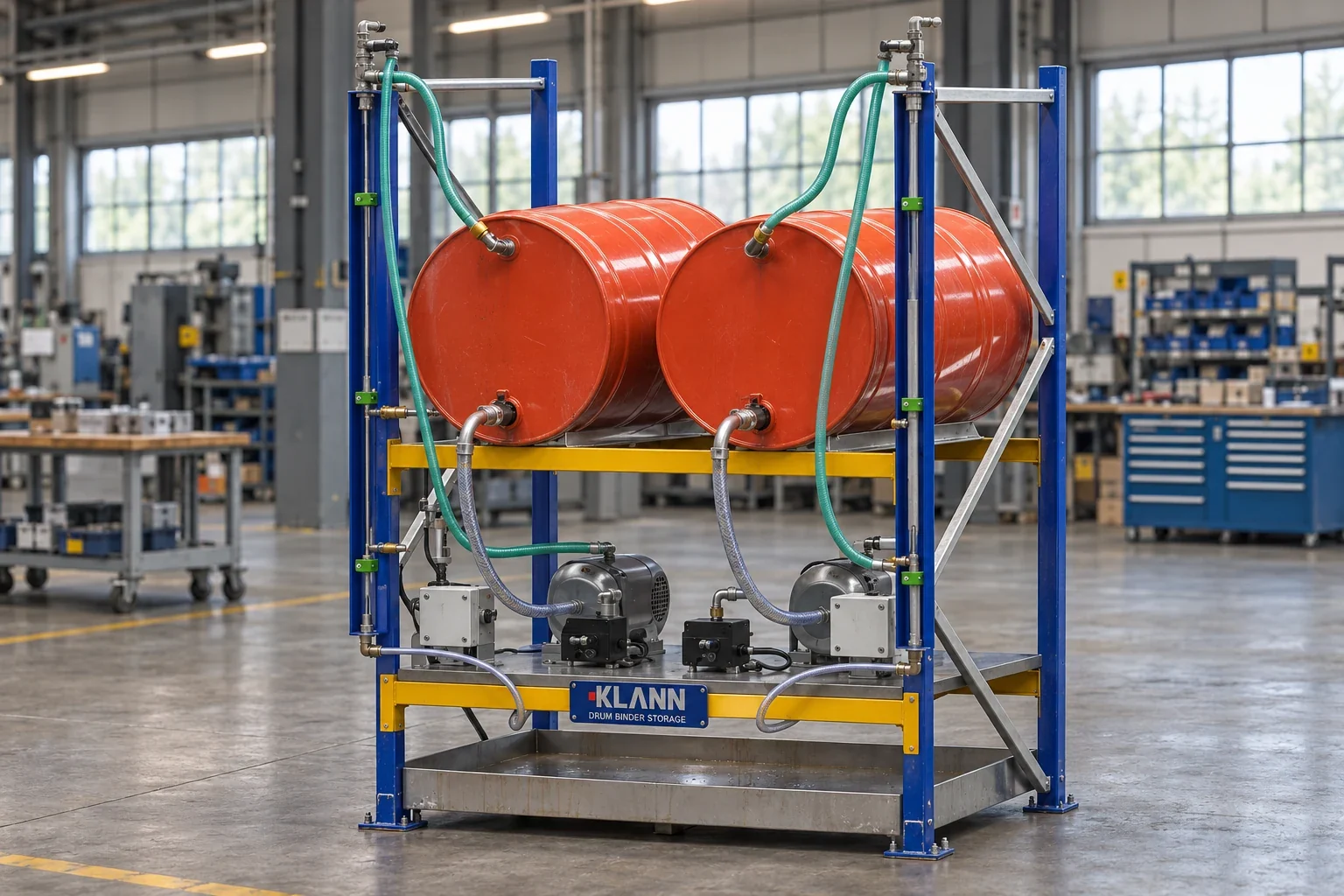
Drum and IBC storage systems supply the core shop with binders, using spill containment trays and suitably configured transfer equipment.
Technical overview
- Containers
- Drums or IBC containers
- Transfer
- Gravity discharge or pumping stations
- Container changeover
- Quick couplings; optional buffer tanks
- Temperature control
- Optional cooling or heating
Drum and container storage for binders
KLANN offers drum and container storage systems with intermediate tanks, gravity discharge or pumping stations. The pumping stations also transfer binders over longer distances to the dosing system.
Equipment includes spill containment trays, quick couplings for container changes, and suitable filter and adsorber systems to limit air contact. Cooling or heating equipment is available for environments with widely fluctuating temperatures.
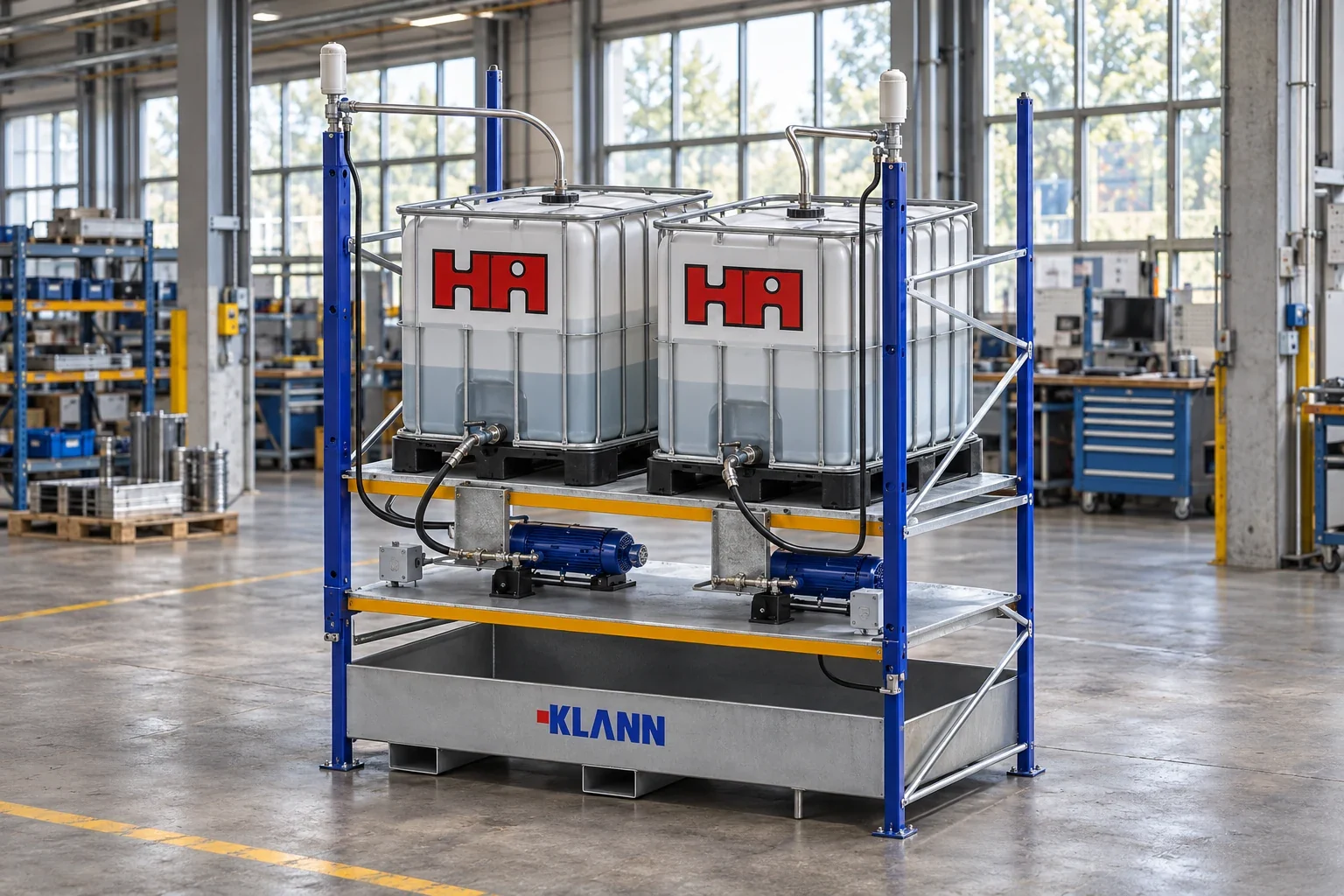
IBC storage is an option for higher binder consumption. The design allows level checks and connection using quick couplings. Drips at the connections are caught in drawers, while spill containment trays retain larger leaks.
Buffer tanks, temperature control and transfer
Optional buffer tanks prevent the dosing supply from running dry during container changes. The tanks can be heated to dose binder at a consistent temperature and therefore comparable viscosity.
For hydrophilic binders, air-drying filters at the vent connection limit contact with humid air. Accessible, hermetically sealed double-diaphragm pumps handle transfer and dosing.
Questions and answers
When is IBC container storage suitable?
IBC container storage is suitable for higher binder consumption. KLANN matches the storage, transfer equipment and connection to the dosing system to the specific requirements.
Can the dosing supply continue during container changes?
Optional buffer tanks are available for this purpose. They bridge the container changeover and can be heated if required.
How is contact between hydrophilic binders and humid air limited?
Air-drying filters are fitted at the vent connection. Suitable filter and adsorber systems also limit air contact within the storage system.
Details that make the difference.