Sample transport systems
SV50-1d and HLK-50 systems automatically transport iron ore samples from the conveyor sampling point to the analytical laboratory, with installations in Australia.
Technical overview
- System types
- SV50-1d and HLK-50
- Material transported
- Iron ore samples
- Transport route
- From conveyor sampling point to analytical laboratory
- Application sites
- Roy Hill Mine and Port Hedland, Australia
Automatic transport of iron ore samples to the laboratory
KLANN SV50-1d and HLK-50 sample transport systems connect the conveyor sampling point with the analytical laboratory. They are used at iron ore mines such as Roy Hill Mine and at the iron ore export port of Port Hedland in Australia.
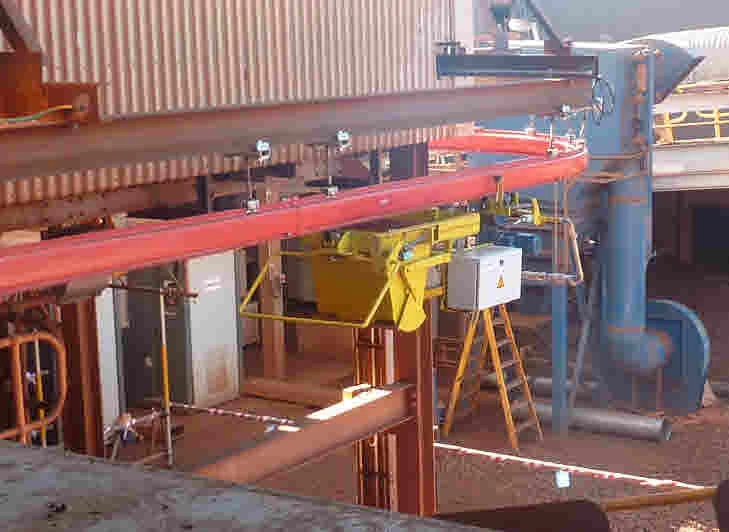
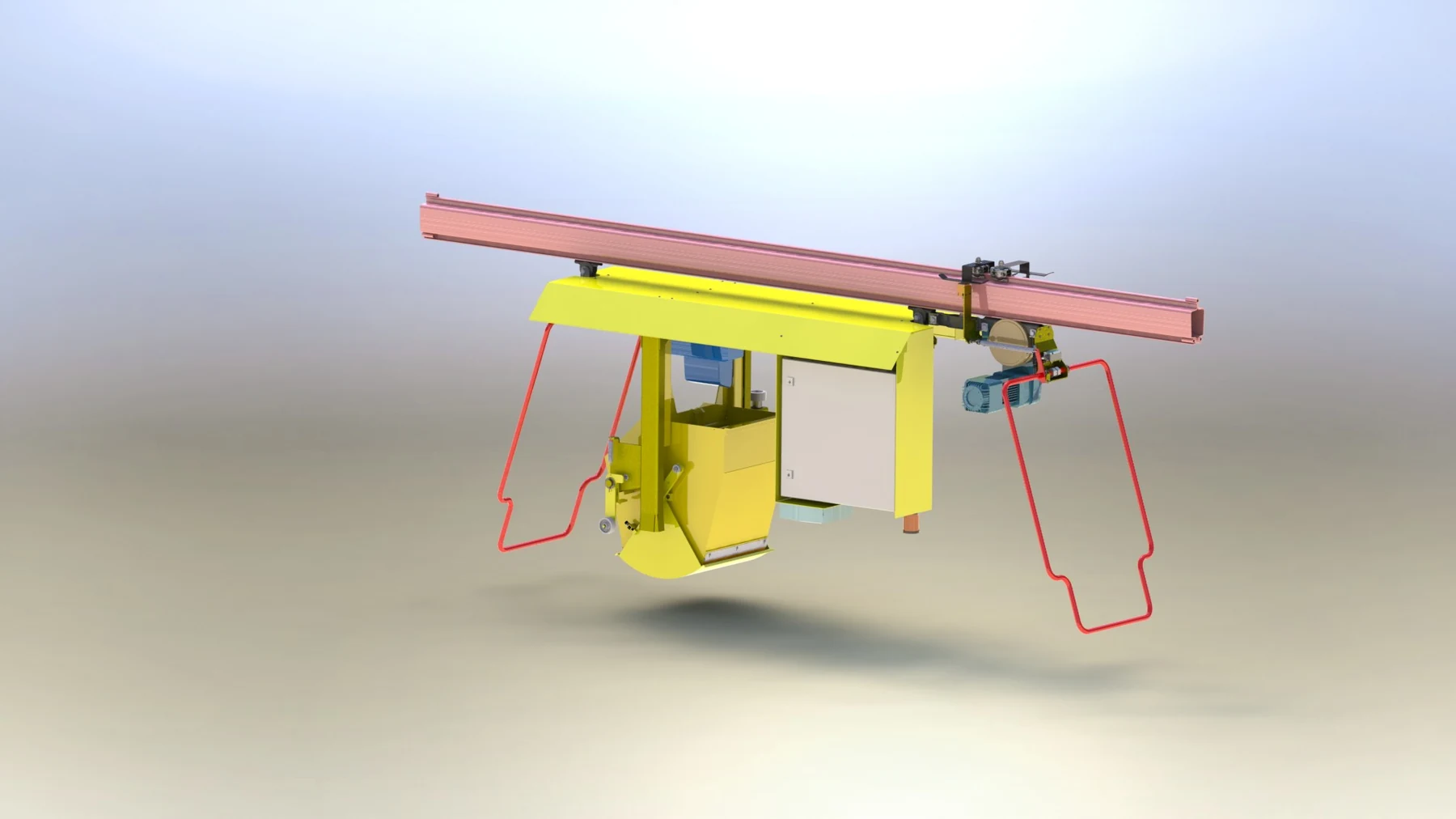
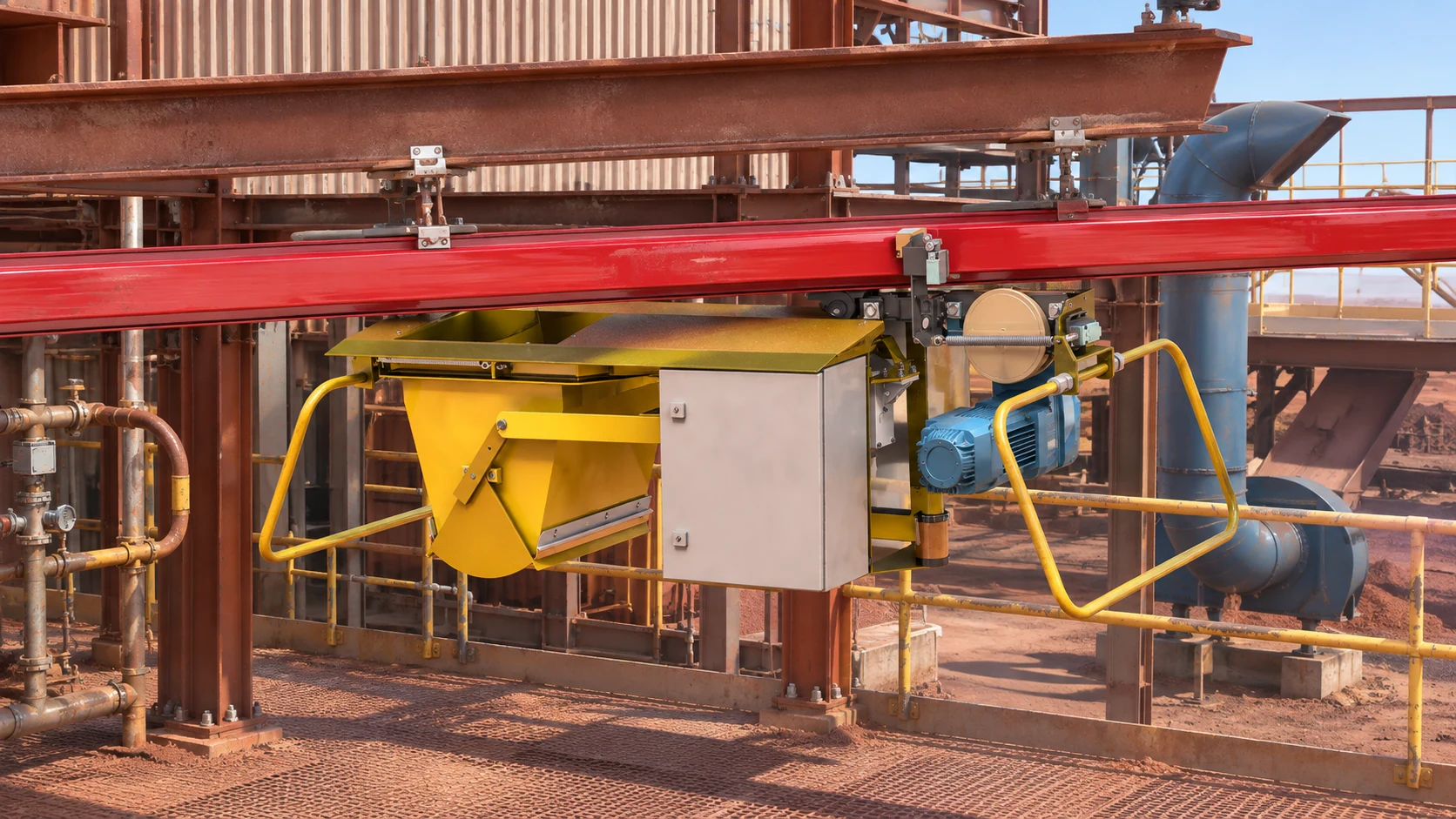
The system is based on established core sand transport technology. A bucket trolley travels beneath a monorail from the loading point to the laboratory. After automatic bottom discharge, it returns to collect the next sample.
The technical article on the Port Hedland installation describes a friction-wheel drive, internal conductor rails and radio control. The trolley therefore requires no trailing cable. The track can accommodate curves, inclines and declines; a chain-hoist version is described for larger height differences.
Australian installations: Roy Hill and Port Hedland
The KLANN project report documents the transport of pellet and lump ore samples over several hundred metres to the central laboratory at Roy Hill Mine. The 2014 technical article describes the Port Hedland installation, commissioned in 2013, carrying samples of approximately 30 kg per trip.
Download technical article (PDF, English)
Questions and answers
Which sample transport systems does KLANN supply for iron ore?
KLANN uses the SV50-1d and HLK-50 types. They automatically transport iron ore samples from the conveyor sampling point to the analytical laboratory, including at installations in Australia.
How does automatic sample transport work?
The sample enters the open bucket through a chute. The trolley travels to the laboratory, automatically empties the bucket through an electrically operated bottom flap, and then returns to the loading point.
Where are KLANN sample transport systems used?
Documented installations include Roy Hill Mine and the iron ore export port of Port Hedland in Australia. The project report and technical article describe the automatic transport of iron ore samples to the laboratory.
Can the route include curves and height differences?
Yes. The technical article describes a DEMAG KBK rail with curves, inclines and declines. A chain-hoist version first lifts the bucket before horizontal travel continues. The route is designed for each project.
How are the drive and control system supplied?
In the system described in the technical article, internal conductor rails supply power to the drives. Signals are transmitted by radio, so the trolley requires no trailing cable.
What technical specifications does the article give?
The 2014 article gives a bucket capacity of 10–100 litres, travel speed up to 60 m/min, route length of 5–200 m and lifting height of 1–8 m. These figures describe the system at that time and are not a universal specification for every current SV50-1d or HLK-50 installation.
Can the system be retrofitted into existing facilities?
The article identifies retrofitting as a possible application. The compact design and suspension of the rail from steel beams facilitate integration. Available space, the supporting structure and transfer points must be assessed for each project.
Which safety features are described?
The article mentions bucket locking during travel and safety hoops for collision protection. The specific safety design depends on the planned installation and its operating conditions.
Is operation in dusty and hot conditions documented?
The article reports operation at Port Hedland in ambient temperatures up to 55 °C and in dusty, corrosive air. This is an operating report for that installation; the design for a new location is agreed separately.
Which work step does the system automate?
It automates batch transport between the sampling point and the laboratory. Laboratory staff no longer need to collect samples at the sampling location. Sampling and analysis themselves are upstream and downstream processes.
Sample transport in practice.
Sample transport system HLK integrated into a fully automated iron ore analysis process